Dana Bauer · 25 September 2026
How Behavioral Cues Shape Endurance in Crowded Digital Markets During Algorithm Adjustments
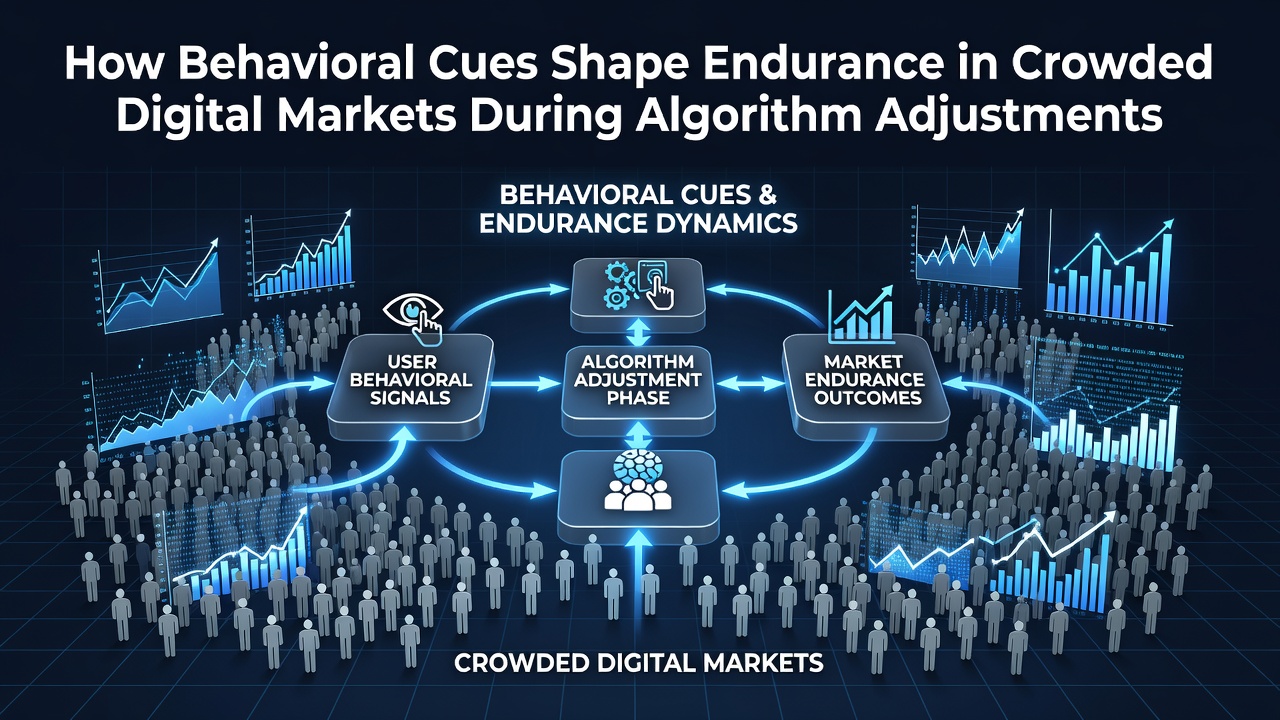
Behavioral cues such as click patterns, dwell times, and scroll depths have long guided how platforms adjust visibility in crowded digital spaces, and these signals gain particular weight when algorithms undergo updates that recalibrate ranking priorities across sectors like e-commerce and content distribution. Platforms process these interactions continuously, converting them into inputs that determine which listings or posts maintain positions amid high competition, while those lacking sustained engagement often drift toward lower visibility tiers.
Core Mechanisms of Behavioral Signal Processing
Algorithms in major digital marketplaces evaluate sequences of user actions rather than isolated events, so a cluster of rapid clicks followed by extended page views registers as stronger endorsement than scattered taps that end quickly, and this layered assessment becomes decisive during adjustment cycles when systems reweight variables to address emerging patterns in user navigation. Research from institutions like the University of Toronto has mapped how such cumulative signals correlate with ranking stability, showing that products or posts accumulating consistent interaction depth over weeks tend to weather shifts better than those relying on initial spikes alone.
Scroll velocity and hover duration add further granularity, allowing systems to infer content relevance without direct purchases or shares, and observers note that platforms integrate these micro-behaviors into broader models that predict long-term endurance in saturated categories where hundreds of similar entries compete for the same audience segments.
Impact During Specific Algorithm Adjustments
When platforms execute updates, behavioral thresholds often tighten, requiring higher volumes of positive signals to preserve placement, and data collected around the September 2026 adjustment cycle illustrated this shift across multiple marketplaces as listings with below-average dwell metrics experienced accelerated demotion while those demonstrating steady user retention held ground. The adjustment recalibrated weightings on engagement velocity, which meant that slow-building interest curves now competed more directly with burst activity patterns that previously dominated short-term visibility.
European Commission reports on digital market dynamics have documented parallel effects in regulated environments, where updated compliance frameworks intersect with platform algorithms to emphasize sustained user pathways over transient traffic, and this convergence creates environments where behavioral endurance becomes a measurable differentiator for market participants.
Regional Variations in Signal Interpretation
Markets in different regions process behavioral data through distinct lenses shaped by local regulations and user norms, so Australian Competition and Consumer Commission guidelines on digital platform transparency have prompted greater disclosure of how engagement metrics feed into ranking decisions, while Canadian research initiatives have examined similar patterns in bilingual marketplaces where language-based interaction clusters influence endurance outcomes. These variations mean that a cue effective in one jurisdiction may carry reduced weight elsewhere, forcing participants to adapt strategies around regionally dominant signals rather than universal formulas.
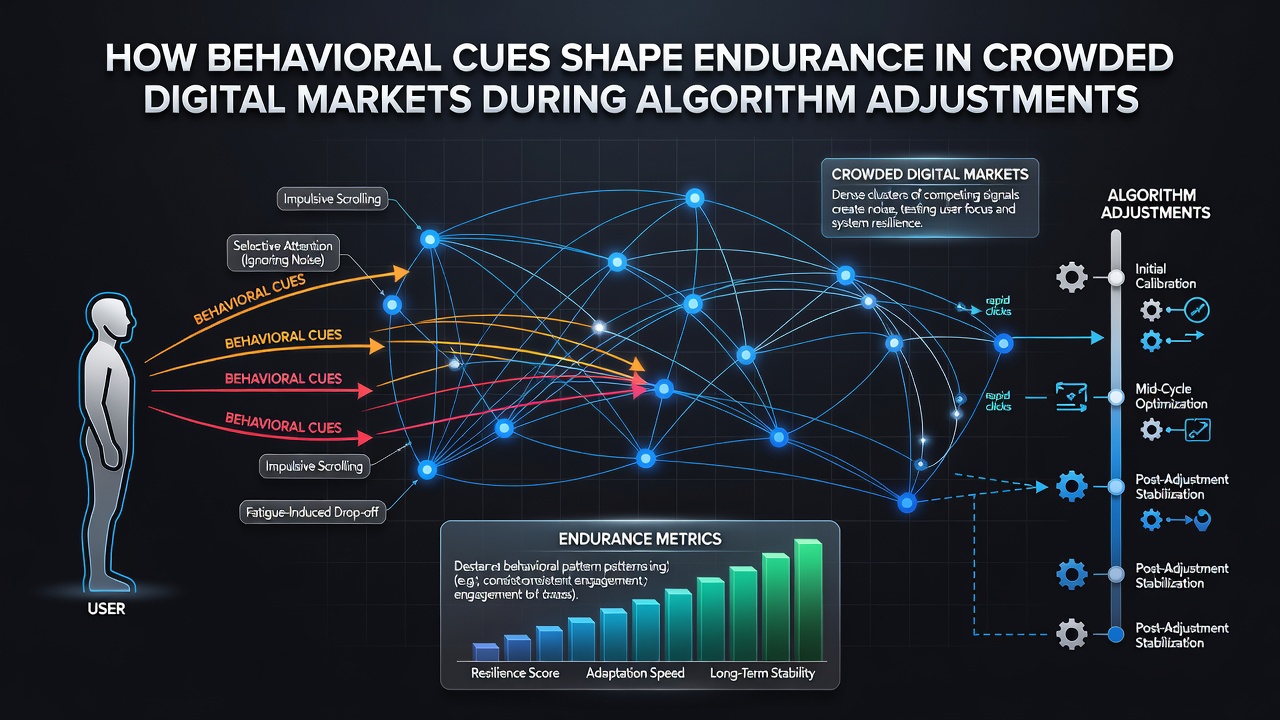
One analysis of post-adjustment data revealed that categories with dense competition saw endurance gaps widen between entries that maintained interaction consistency and those that did not, because the updated models prioritized longitudinal patterns over momentary surges, and this outcome aligned with findings from multiple academic tracking projects that monitored visibility trajectories across thousands of listings.
Practical Patterns Observed in Crowded Categories
Participants who monitor aggregated behavioral trends rather than chasing individual metrics often sustain positions more effectively during recalibrations, because platforms reward coherence across signals such as return visits combined with conversion-adjacent actions, whereas fragmented activity registers as noise that algorithms deprioritize in updated scoring. Studies tracking these dynamics have identified recurring clusters where high-density categories amplify small differences in cue quality, turning minor variations in user retention into substantial placement divergences over successive adjustment periods.
Trade associations in technology sectors have compiled case compilations showing that entities maintaining steady behavioral profiles across multiple update events experience fewer ranking fluctuations, and these compilations underscore how platforms use historical signal sequences to project future endurance when rebalancing competitive fields.
Conclusion
Behavioral cues continue to function as primary stabilizers for visibility in crowded digital markets, particularly when algorithms adjust their internal weightings, and the patterns documented across regions and update cycles demonstrate that consistent interaction sequences provide measurable advantages in maintaining positions amid dense competition. Platforms refine these evaluation methods with each iteration, integrating new layers of user data while preserving the core principle that sustained engagement signals predict longer-term endurance more reliably than isolated peaks.